The Tokyo Sky City vision (it's in the design phase now with no plans for construction yet) looks to me like the
designers are trying hard to come up with helpful solutions to
overcrowding and resource management, and I get why they're thinking
along these lines - it's very creative and solution-oriented. Building up rather than out has a lot of advantages when it comes to creating less carbon emissions, and urban density has a lot going for it in the realm of sustainability, though I understand the impetus behind this project is land pricing. However, this idea of the Sky City looks to me like one big security fail. Any skyscraper of course bears the burden of emergency preparedness, but I can't imagine what would happen to the people in a building that fits a whole city of 100,000 people in the event of tragedy. Perhaps I have more to learn about this design concept, but my gut reaction is that I'd never want to live there. If I'm being honest, though, I'd love to visit if this plan ever becomes reality.
Thursday, November 10, 2011

Wednesday, November 9, 2011
Sustainable and Beautiful = Long Term Success
I appreciate the questions raised in the paper "Undoing the Relation: Image, Sustainability and Architecture" where the
authors Anne-Marie Willis and Tony Fry suggest that instead of focusing on the aesthetics of a building
design in the planning stage, instead we ask the questions:
Beauty and aesthetics are not to be ignored, however, because these factors heavily factor in to the designs ability foster reproduction. When people see a visual image of a building that gives them an emotional pull, they then find themselves plotting how to make what they saw happen again, but for themselves this time. As an example, I would point to any green roof with plants doing well. For whatever reason, this image lights up the hearts of just about anyone. It could be due to biophilia, genetic memory, instincts or any number of factors, but a lot of people just love a green roof. To extend the scale of the image, I've noticed that people also love the idea of green roofs and walls in an urban context. When I've shown pictures of imaginary cities to people with a sea of skyscrapers full of living roofs, they always exclaim over how "cool" that is. It's like people just know there's something "right" about it. I wish I had a dollar for every time I've heard a person say they wish they could live in a "place like that" when they've seen an image of a house or a city with green roofs. Now, I don't mean to suggest that green roofs are appropriate for every project by any means. What I'm saying is that sometimes a beautiful image carries a lot of weight in the hearts and minds of people, and, when that happens, it's more likely to show up again and again. Someone might spend years plotting how to live their life so that they can eventually live under such a beautiful roof.
The authors are right, though, that in this time of climate crisis,
add-on sustainability isn't going to cut it. We have to rethink the way
we live our lives and what processes need to die away. A green roof
doesn't solve that much, nor a worm bin nor a rain water barrel, if one
is flying across the country several times a year and making 45 minute
drives to work every day. Adding solar panels to a house that is
sucking up crazy amounts of energy only prolongs the inevitable collapse
of resources.
The authors make another good suggestion:
If architects and design teams could see, figuratively speaking, DNA strands instead of blueprints, and a face instead of a facade, we'd get closer to solving our problems. Treating buildings with the same kind of consideration as a living creature or an ecosystem leads to making sustainable decisions that tie the building into the natural world, with its rhythms and processes, rather than working against the climate and conditions. Good choices along these lines will work out better long term if they are visually attractive, however, because that adds the emotional component needed for people to apply and reapply these methods.
- "What is this building to sustain?"
- "Is what it is to sustain itself sustainable?"
- "How can it be designed so as to sustain that which is sustainable?"
 |
| Photo: Erik Christensen |
Beauty and aesthetics are not to be ignored, however, because these factors heavily factor in to the designs ability foster reproduction. When people see a visual image of a building that gives them an emotional pull, they then find themselves plotting how to make what they saw happen again, but for themselves this time. As an example, I would point to any green roof with plants doing well. For whatever reason, this image lights up the hearts of just about anyone. It could be due to biophilia, genetic memory, instincts or any number of factors, but a lot of people just love a green roof. To extend the scale of the image, I've noticed that people also love the idea of green roofs and walls in an urban context. When I've shown pictures of imaginary cities to people with a sea of skyscrapers full of living roofs, they always exclaim over how "cool" that is. It's like people just know there's something "right" about it. I wish I had a dollar for every time I've heard a person say they wish they could live in a "place like that" when they've seen an image of a house or a city with green roofs. Now, I don't mean to suggest that green roofs are appropriate for every project by any means. What I'm saying is that sometimes a beautiful image carries a lot of weight in the hearts and minds of people, and, when that happens, it's more likely to show up again and again. Someone might spend years plotting how to live their life so that they can eventually live under such a beautiful roof.
 |
| Photo: Chicago City Hall Green Roof, by TonyTheTiger |
The authors make another good suggestion:
"Sustainments are modest and accumulative, situation specific, starting wherever you are and can, in this sense sustainments ar emany of thse things currently designated as features of sustainable architecture - but they are more than this, because they are focused on time and process not just on space and object." So, the pertinent thought process becomes how to make the building something that sustains over time rather than something that consumes over time, which is more important than what it looks like.
If architects and design teams could see, figuratively speaking, DNA strands instead of blueprints, and a face instead of a facade, we'd get closer to solving our problems. Treating buildings with the same kind of consideration as a living creature or an ecosystem leads to making sustainable decisions that tie the building into the natural world, with its rhythms and processes, rather than working against the climate and conditions. Good choices along these lines will work out better long term if they are visually attractive, however, because that adds the emotional component needed for people to apply and reapply these methods.
Tuesday, November 8, 2011
Sumatran Coffee Contributes to Tiger Extinction
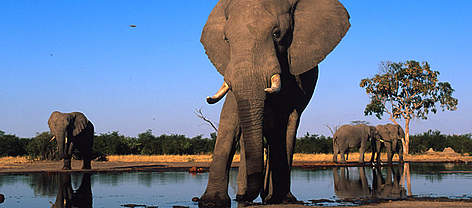
There are so many critically endangered species on this planet, it's like a horror story come to life. When I consider the likely inevitability that we will lose the polar bear, sea turtles, the North Atlantic right whale, the giant panda, the orang-utan, the elephant, many frogs and the tiger, amongst countless others, I just want to cry.
Speaking of tigers, the World Wildlife Federation says here, "This is clearly an emergency: if nothing is done, tigers will disappear from the wild within the next decade." You know what I learned from reading this article? This just kills me... I can hardly believe I've been contributing to the decline in tiger habitat on a regular basis. You know how? I've been drinking Sumatran coffee. The WWF says here and in this report that, "[i]llegally grown coffee in Sumatra is driving the destruction of tiger habitat... Watch where your coffee comes from – and choose coffee grown according to environmentally friendly principles." Further reading on the topic warns that even Sumatran coffee supposedly grown on already deforested land gets illegally mixed by the growers with coffee grown in protected tiger habitat. (For the record, Starbucks denies buying beans from Lampung, the area of Indonesia in question.) Here is more information on what needs to be done to save what is left of the tiger population, which is possibly down to 3,200 individuals in the wild.
1 in 10 species worldwide are predicted to be extinct by 2100 due to global warming, according to University of Exeter research. This is not the future we want for our generations to come! Dr. Robert Wilson of the University of Exeter says, ""We need to act now to prevent threatened species from becoming extinct. This means cutting carbon emissions and protecting species from the other threats they face, such as habitat loss and pollution."
 |
 |
| © WWF-Canon / Martin HARVEY |
1 in 10 species worldwide are predicted to be extinct by 2100 due to global warming, according to University of Exeter research. This is not the future we want for our generations to come! Dr. Robert Wilson of the University of Exeter says, ""We need to act now to prevent threatened species from becoming extinct. This means cutting carbon emissions and protecting species from the other threats they face, such as habitat loss and pollution."
Monday, November 7, 2011
Extreme Pollution in China
 | |
| Photo: Chang W. Lee/The New York Times |
I've never been to China, but I've heard stories from those who have. There are places where people wear surgical masks just to walk around on the street to filter the air they are breathing. The New York Times published an unsettling series of articles on the topic, including this one: As China Roars, Pollution Reaches Deadly Extremes. The NYT also published this chilling slideshow of pollution in China.
The article states, "Only 1 percent of China's 560 million urban dwellers breathes air considered safe by the European Union." Like so many families, in the photo above, a "family of migrants moved to Ningxia Province from Inner Mongolia so that the father could work at a nearby factory." While the already developed world is beginning to rein in its carbon spewing excesses, China is just hitting its stride.
 |
| Carbon Dioxide Emissions from Consumption in China |

The NYT article was published in August of 2007. It speculated that China might lead the world in carbon emissions by the end of the year. Several sources say that China had already taken the lead at that time, and by 2008 they were definitely the leader in emissions (not by per capita, however.)
There has got to be a better way. The planet cannot handle developing nations following this model. Greenpeace has a website describing the solutions available for mitigating air pollution disaster: The Solutions. To summarize their ideas, the most important step is weaning off of coal, China's main power source, and instead developing renewable energy technologies. Next is strict regulation of pollution. On a more positive note, China is one of the world's leaders in solar technology, producing something like 23% of the world's photovoltaic products. I hope that they find a way to make solar power take over very, very quickly.

Sunday, November 6, 2011
Beautiful Underground Home
This house is pretty amazing. Look how little habitat it disturbs! Incredible. See the article Beautiful Swiss House is Buried Under the Earth by Diane Pham of inhabitat. The article mentions that "[b]y building the house underground, the architects were able to almost completely eliminate the need for heating or cooling in the winter and summer months." Kudos to the architects SeArch and Christian Müller for showing us what is possible.


Saturday, November 5, 2011
DIY Low Flush Toilet
It's easy to make your home toilet into a low flush toilet!
Toilets use more water than any other item in the home. On the website for The ABC's Of Toilets, it says, "If all U.S. households installed water-saving features, water use would decrease by 30%. This would save an estimated 5.4 billion gallons of water per day, resulting in daily dollar-volume savings of $11.3 million or more than $4 billion per year."
Have you tried this? Please tell your story in the comments section below.
- Find a clean half gallon plastic jug with a lid.
- Add enough sand, gravel, rocks or what-have-you to the jug to weigh it down so it can't float, probably an inch or two of material.
- Fill the rest of the jug with water.
- You can add a few drops of bleach to the jug to prevent gunk build up.
- Add the lid to the jug.
- Place the container into the tank of your toilet, away from moving parts.
- If you run into trouble, it will likely be from displacing too much water in the tank. Don't get in the habit of flushing more than once, as that wastes more water than the original design. This is an easy problem to fix... just try a smaller bottle, since every little bit helps. When the time comes to replace the toilet, buy a WaterSense certified model and forgo the jug.
- Want to make it more fun? Check your water bill before and after making this easy alteration. Ka-ching!
 |
| Photo: Happy Simple Living |
Have you tried this? Please tell your story in the comments section below.
Friday, November 4, 2011
Design To Withstand Climate Change
This is an interesting article, Design for Adaptation: Living in a Climate Changing World,
from BuildingGreen.com.
This article explains how buildings should be designed to adapt to a changing world, since the likelihood of climate change abruptly altering the world around us is high. It's kind of sad, but practical. It includes advice like raising buildings and mechanical equipment off the ground, since floods and sea levels might destroy the building otherwise. There's lots of emphasis on passive heating/cooling, use of on-site generated renewable energy, and rain water harvesting.
I would have added, were it my article, a section urging urban food growing and seed banking, since if a community finds itself unable to acquire food from long distances in the event of an emergency, it would be better to have a plan already in place for this important aspect of life. Communities ought to do this anyway, for their own well-being as well as decreasing dependence on industrial farming and petroleum. I don't think enough people realize what is happening in the world of farming and how our ability to find viable seeds in the event of catastrophe is rapidly diminishing.
 |
| Photo: Global Green |
This article explains how buildings should be designed to adapt to a changing world, since the likelihood of climate change abruptly altering the world around us is high. It's kind of sad, but practical. It includes advice like raising buildings and mechanical equipment off the ground, since floods and sea levels might destroy the building otherwise. There's lots of emphasis on passive heating/cooling, use of on-site generated renewable energy, and rain water harvesting.
I would have added, were it my article, a section urging urban food growing and seed banking, since if a community finds itself unable to acquire food from long distances in the event of an emergency, it would be better to have a plan already in place for this important aspect of life. Communities ought to do this anyway, for their own well-being as well as decreasing dependence on industrial farming and petroleum. I don't think enough people realize what is happening in the world of farming and how our ability to find viable seeds in the event of catastrophe is rapidly diminishing.
Subscribe to:
Posts (Atom)